Thursday, April 19, 2007

Little Royal's Funky Tales

Little Royal: Little Royal Freeze

Little Royal: Keep On Loving

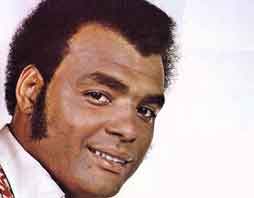
These tracks by the mysterious Little Royal were previously unissued until they were found in the Excello Records vaults and released on 1996's Funky Tales. They were most likely recorded sometime in the mid sixties during the "Freeze" dance craze. Born in Durham North Carolina and raised in Washington DC, Royal Torrence started his career with his uncle's gospel group where he was discovered by James Brown and earned himself a spot on The James Brown Revue. James Brown's influence is apparent on these sides. Little Royal & The Swingmasters cut numerous sides for Tri-Us and Black Pride labels and had a moderate hit with the 1972 single Jealous. Subsequent recordings failed to reach the same heights but Little Royal continued to be a crowd pleaser for several more years.

Sunday, April 15, 2007

Tax Time


Gary Nesta Pine & Dollarman: Money

I hate gimmick records. For example, let's cover every track of Pink Floyd's 1973 classic Dark Side of the Moon, but with reggae artists. Sounds stupid, but 2003's Dub Side of the Moon is actually good. Here's the Easy Star All-Stars version of Money. The choice to replace the intro cash register with a bong is a little juvenile, but I definitely dig the rap break.

The O'Jays: For the Love of Money

It's a little overplayed and probably ruined forever by that hump Donald Trump, but I always liked this Gamble & Huff ode to all things greed performed by The O'Jays from their 1973 masterpiece album Ship Ahoy. Dollar bills y'all.

Prince - Money Don't Matter 2 Night

Prince's shot at Philly Soul from his 1991 album Diamonds and Pearls.

Dennis Brown - Money In My Pocket

Here's Mr. Brown's 1972 hit single. You can find it on about a thousand Best ofs and Reggae Hit compilations. One of my favorites is the 1993 box set The Story of Jamaican Music from Mango.

Wednesday, April 11, 2007

Why Can't We Live Together?


Timmy Thomas: Why Can't We Live Together


This song is proof that less is more. Recorded as a demo in 1972 Timmy Thomas' rather simple song became a surprisingly huge hit. Thomas accompanies himself on organ backed by a cheesy rhythm box. It's the title track on his LP from 1974.

Tinga Stewart: Why Can't We Live Together


Tinga Stewart's 1977 performance is riven with emotion and in many ways far more powerful than Thomas's original. In Stewart's capable hands, the lyrics become an accusation, a demand, and finally an affirmation that indeed "we can live better." A stunning cover that leaves the original in the dust. This track can be found on Blood & Fire's exceptional compilation from 2001 Darker Than Blue: Soul From Jamdown 1973-1977.

Steve Winwood: Why Can't We Live Together


Taken from Winwood's 2003 "comeback" album About Time this version has a considerably more Latin vibe featuring Winwood on a Hammond organ, drummer Walfredo Reyes Jr., and guitarist José Piresde Almeida Neto. Congas and timbales flesh out the rhythm.

Sunday, April 8, 2007

Jamaica to Toronto


Canada has a large population of West Indians who created an often overlooked music scene. Centered in Toronto in the late 60's and early 70's Jamaican rhythms mixed with R&B creating a new hybrid of soul music. Here are a few tracks from Light in the Attic's recent compilation Jamaica to Toronto.

Jo-Jo and the Fugitives: Fugitive Song

Recorded in 1967, this track features Jo-Jo Bennett on trumpet and vocals. Musically it's very reminiscent of James Brown's I Don't Mind, but Jo-Jo's desperate pleading vocals makes it his own.

Jackie Mittoo: Grand Funk


As a member of legendary Jamaican groups such as The Sheiks and The Skatalites Jackie Mittoo helped define early reggae music. On this track from 1971 Jackie demonstrates his R&B side with super funky results.


Cougars: I Wish It Would Rain

A beating heart sets the tempo for this 1970 cover of The Temptations classic. Motown, funky ska and Rastafarian chants all come together to make this track irresistible.

Wednesday, April 4, 2007

The Father of Rock N Roll


I'm never really sure why Elvis is considered the "King of Rock N Roll". I assume it's because he became the first profitable mainstream rock star by putting a pretty white face to great songs by the likes of Big Boy Crudup and Junior Parker. Elvis' early recordings are great, but is he the King? Chuck Berry could be considered a king, but his personal troubles kept a dark cloud over him throughout his career. Little Richard labels himself the architect and he may be right. I guess there is no answer to these label debates, but I know who is the father of rock...Mississippi Muddy Waters.

Born McKinley Morganfield outside of Clarksdale, Muddy Waters moved north to Chicago in the 40's and single handily defined Chicago blues until his death in 1983. Buddy Guy, Junior Wells, James Cotton, Little Walter,Otis Spann, Jimmy Rogers and of course the great Willie Dixon all played in his band at one time or another helping to make Chess Records the epicenter of electric blues. Muddy Waters influenced generations of rock stars like Eric Clapton, The Who and The Rolling Stones who took their name from one of Muddy's signature songs. Muddy Waters had a man's voice and lived a man's life always with class. Today is his 92nd birthday.

Muddy Waters: My Home Is In The Delta

This track is taken from 1964's Folk Singer, Muddy Waters "unplugged" album. The album was a response to the growing popularity of folk music in the country. Intimate and now fully remastered you feel as though you are in the room. Muddy's vocals are incredible and it features a VERY young Buddy Guy on guitar.

Muddy Waters: Tom Cat

In 1968 the blues were in a serious decline. Chess' solution was to hook older blues legends up with young psychedelic musicians and record what happens. Electric Mud was the result. The trippy, sometimes uncomfortable versions of Muddy Waters classics were widely rejected, but I actually like the results.

The Rolling Stones: I Just Want To Make Love To You

Here are The Stones covering their idol on their first LP from 1964 dubbed England's Newest Hit Makers.

BONUS

Muddy at Newport Jazz 1960


Monday, April 2, 2007

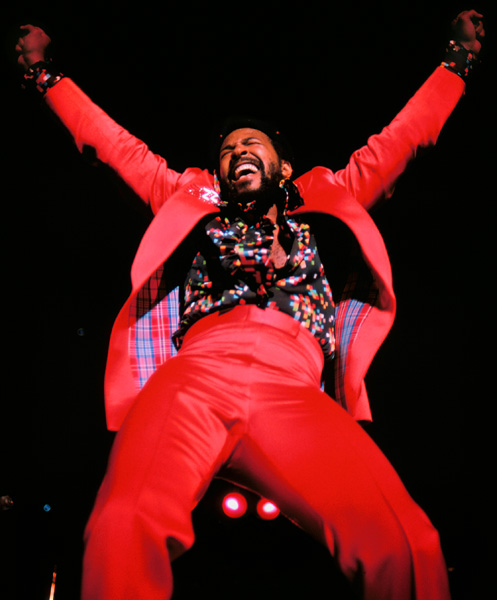
Marvin Gaye : April 2, 1939 - April 1, 1984


"One of the most gifted, visionary, and enduring talents ever launched into orbit by the Motown hit machine, Marvin Gaye blazed the trail for the continued evolution of popular black music. Moving from lean, powerful R&B to stylish, sophisticated soul to finally arrive at an intensely political and personal form of artistic self-expression, his work not only redefined soul music as a creative force but also expanded its impact as an agent for social change." Marvin Gaye would've been 68 today.

Marvin Gaye: Soon I'll Be Loving You Again

This track is from his 1976 I Want You LP at the peak of his sexually charged music. Marvin's vocals ooze.

Marvin Gaye: Piece Of Clay

A tragically ironic lyric considering Marvin's death at the hand of his own father. This track is incredibly moving with a screaming guitar and a gospel vibe. It can be found on the 1995 box set The Master 1961-1984.

Marvin Gaye: Let's Get It On (Da Producers MPG Groove Mix)

Taken from 2005's Motown Remixed, this is yet another clue that Marvin Gaye's music will last forever. The laid back groove on this track breathes new life into one of Marvin's most popular songs.


BONUS

Marvin performing What's Going On/What's Happening Brother from 1973.


Sunday, April 1, 2007

The Greatest Song EVER.


Music, like all art, is constantly under debate, but every once and a while an artist produces a masterpiece that is universally praised. If we're lucky we can witness this rare feat that generally will only occur every 300-400 years. Well children, it has happened...The greatest gift to the arts in our lifetime, and possibly any other lifetime. Sit down for this one and enjoy.
Quite simply
The Greatest Song EVER.